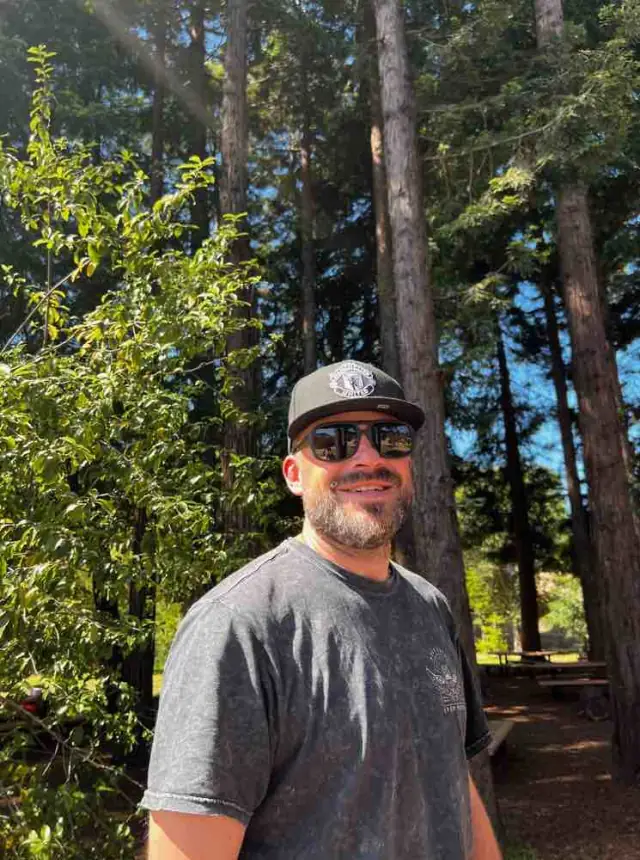
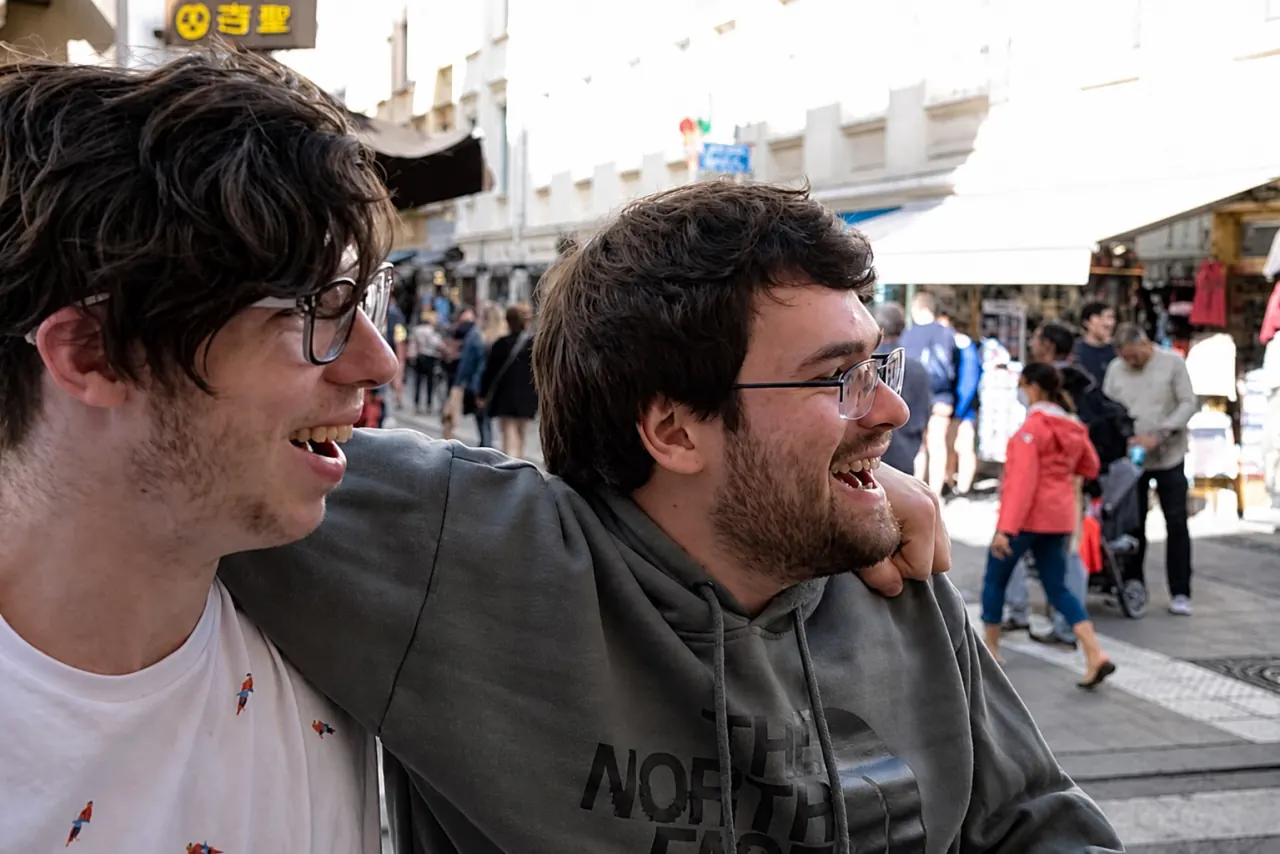
A WanderRock group at dinner
About Us

Get them out into the world.

WanderRock leads international small group adventures for neuro-diverse young adults (18-32ish) with High Functioning Autism, ADHD, Anxiety etc. This is how we got here, what we believe, and how we actually run a trip.

Why we started

WanderRock was founded in 2020 by Danny Raede and Ted Kempf. Danny was diagnosed with Asperger's and ADHD at twelve and runs Offmap, a training and coaching organization for families on the autism spectrum. Ted has been designing and building programs for neuro-diverse teens and young adults since 2008.

Between them they had spent a long time working with this group, and kept running into the same gap. There was plenty on offer close to home, and very little that took somebody genuinely far away and treated them as an adult while they were there.

So that is what we built. Fourteen-day trips, small groups, public transport, and destinations worth two weeks of anybody's time — Japan, Italy, Switzerland, Germany. Travelers are roughly 18 to 32, and the trips are designed to challenge without overwhelming.

A WanderRock group at an izakaya in Japan

Our Core Beliefs

Get Them Out Into The World... By Getting Them Out Into The World

Stress + Rest = Growth

The combination of good stress (from visiting new places, trying new things and the physical act of travel) plus deep restorative rest (from things like meditation, nature, hot tubs, and hanging out with friends) equals growth.

Contrast Breeds Wisdom & Maturity

Those who have had more experiences in their life have more contrast, and thus are able to have more perspective about the decisions they make in the world. It's a lot easier to navigate home life once you've had to navigate the challenges of life on the road.

Book Knowledge ≠ Experiential Knowledge

There's only so much that can be done through reading and learning. To get the real knowledge, you need to get out there into the experience of it, experiencing the world with all 5 senses, exploring a foreign town, or meeting new people. There is no replacement for direct, lived experience.

Environments Cause Tendencies

The environments we spend the most time in tend to cause us to act in certain ways. A nice, quiet bedroom with a computer on a desk will promote time spent on that computer. A giant cliff with a waterfall and hiking trails will cause tendencies of hiking.

How our guides work

Our guides know the ground properly — they have walked these routes many times, several of them speak the language, and they can tell you which restaurant on the street is worth your evening. What they will not do is do it for you.

A guide standing at lunchtime in Osaka says something like: "I'm getting pizza. I'd recommend you get something else." Then everybody goes and eats, separately, and by the evening twenty people have twenty different stories about what they found.

The standard we hire and train to is simple: treat every traveler the way you'd treat a friend of the same age.

A street in Japan

We wait to be asked. Then we help completely.

Stepping in before being asked is a verdict on somebody's capability, delivered without words. Being asked and then helping properly is just what friends do.

We don't praise the ordinary.

"Well done for coming down to breakfast" announces that breakfast was in doubt. Nobody congratulates a peer for turning up, so neither do we.

We don't check in constantly.

"How are you doing with everything?" every few hours turns a fortnight into an assessment. We are close by, we are watching the day, and we are not interviewing anybody.

We talk to travelers, not about them.

Conversations about an adult happen with that adult in them. Parents get a real conversation too — just not one held over somebody's head from across the room.

Nobody is asked to perform themselves.

No icebreakers, no going round the circle, no sharing your intention for the day. People introduce themselves when they feel like it, which on a fourteen-day trip they always do.

Discomfort and danger are not the same thing

Most travel companies treat these as one category and prevent both. We do not, because the first one is where the whole value of the trip lives. The line between them is a wall, not a slider, and holding that wall is the hardest part of our guides' job.

Things we want to happen

We step in to catch. We never step in to prevent.

  • Rain you weren't dressed for, despite the packing list
  • A ticket machine in a language you cannot read
  • Ordering the wrong thing and eating it anyway
  • Being turned around for twenty minutes
  • Deer in Nara that will headbutt you for a rice cracker
  • A genuinely hard afternoon that you get through

Things we do not tolerate

Prevented entirely. No exceptions, no judgement calls.

  • Anybody unaccounted for
  • Anybody assaulted, drugged or robbed
  • Anybody physically at risk
  • Anybody left without a way back

There is no version of "well, they learned something" that applies on this side of the wall. It is a different category, and it gets a different answer.

What that looks like in practice

Guides carry local phones and know the taxi numbers. Everybody has the address of that night's accommodation written out in the local language, on a card, in their pocket.

If somebody has a hard time on a platform in Nara — and that has happened, and it will happen again — the answer is practical. A taxi, a quiet walk back, a coffee. Not a debrief.

Our guides know each traveler well enough to tell the difference between confusion that is doing something useful and confusion that has stopped being useful. That judgement is the job.

About The WanderRock Team

Danny Raede

Danny Raede

Co-Founder / Head of Trip Development

Danny Raede, diagnosed with Asperger's & ADHD at age 12, is the Executive Director of Offmap, a training & coaching organization for families on the Autism Spectrum, and the Co-Founder of WanderRock.

Growing up in Santa Barbara, CA, he has always had a passion for exploring the world. He has been to 19 countries on 5 continents, and enjoys the challenge of finding good mexican food wherever he goes.

Ted Kempf

Ted Kempf, MA T

Co-Founder / Head of Curriculum Development & Admissions

Ted has been involved in designing and building programs for neuro-diverse teens and young adults since 2008. He has a Masters in Secondary & Post-Secondary Education and has spent time living in South America, traveling Europe and studying Polynesian Anthropology & Ethnobotany in the South Pacific.

In his free time he enjoys surfing, playing soccer and spending time with his family.

Eileen Orquiza

Eileen Orquiza

Lead WanderRock Guide

Eileen has extensive experience living in Japan and working as a tour guide. She speaks fluent Japanese and, in addition to Japan, has had the pleasure of traveling to other 10 countries including Taiwan, Italy, The Philippines and Mexico.

The thing she loves most about traveling is seeing a world different from where she came from and immersing herself into their culture.

Shane Guerin

Shane Guerin

Lead WanderRock Guide

Shane says "As a child, I was raised under the philosophy that the best way to learn about the world is to genuinely experience it for yourself. As such, I've had the fortune of being able to travel frequently and create those incredible defining moments in dozens of countries across four continents.

From racing down the Autobahn in Germany and swimming with sharks in Polynesia, to hiking with elephants in the jungles of Thailand and teaching ESL in Japan, I can't say I've seen it all, but I've certainly seen a lot. I also speak conversational Japanese and basic German, which has helped aid in both my travels and connections."

In The Press

What others are saying about WanderRock trips

Wyatt Dunkerly

"Unbelievable. I use that word a lot because that describes most of the trip to Europe. It was just unbelievable.

My family goes on vacation about once or twice a year, and I've been suggesting Europe up for as long as I can remember, and we've never gone. I never really was confident that I'd be Self-sufficient enough to make it over on my own. And now having gone, it's it was just as amazing as I'd always imagined."

Wyatt Dunkerly · Novato, CA
Read More Reviews

Want to see how it works on the ground?

The curriculum page goes into what a day actually contains, and each itinerary shows the shape of a full fourteen days.

Or just talk to us. We're happy to work out over a call whether one of our trips is right for you.